
A roof replacement quote shows up in your mailbox on a Tuesday. Suddenly the three-bedroom where you raised your kids feels less like a home and more like a bill with a lawn attached. That’s usually when the question surfaces. It rarely comes during some crisis, just an ordinary week when the math quits working. Trading a house for an apartment isn’t surrender. Plenty of people I’ve sat across the table from call it the first clear-headed money decision they’ve made in a decade.
Should I Sell My House and Move to an Apartment?
For years I told sellers this was mostly about feelings, and I had it backwards; the numbers drive it far more often than feelings do.
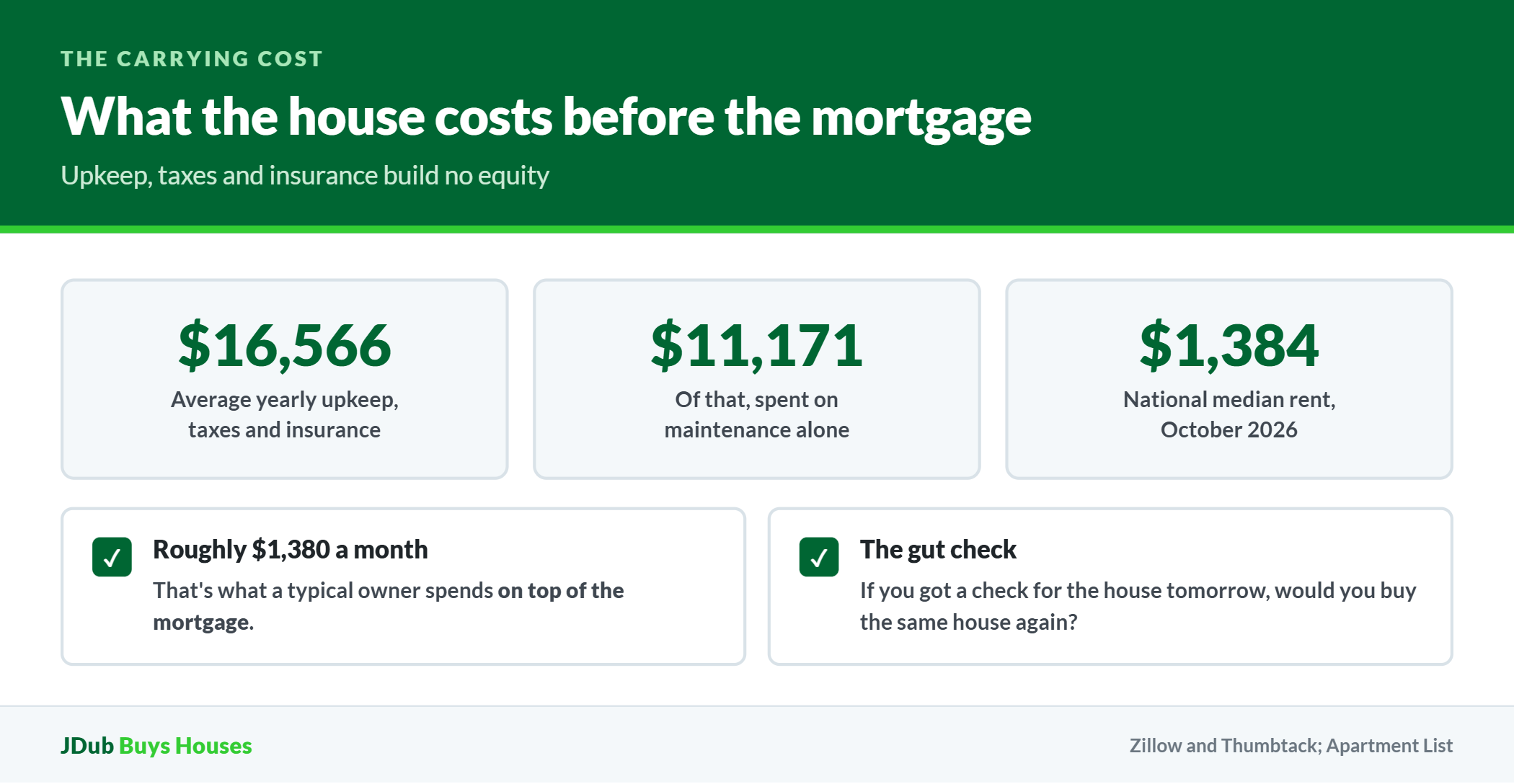
Look at the carrying cost first. A Zillow and Thumbtack analysis reported in October 2026 put the average homeowner’s yearly bill for upkeep, property taxes, and insurance at $16,566, roughly $1,380 a month on top of the mortgage. Maintenance by itself ate $11,171 of that. Not a dollar of it builds equity. It only keeps the house standing.
Now look at the apartment down the street. Across all unit sizes, the national median rent sat at $1,384 as of October 2026, with one-bedroom apartments at $1,215 and two-bedrooms at $1,369, according to Apartment List. In plenty of households, an apartment payment lands close to what taxes, insurance, and repairs were already burning before the mortgage even showed up.
So should everyone sell? No. When your mortgage is nearly paid off and the house is in good shape, staying put often wins. I’ll say that to a seller plainly, even when it means I don’t buy the house.
The calculus flips fast, though, once deferred repairs pile up. A few years back an out-of-state heir called me about a 1950s ranch her uncle left her. Her contractor priced the kitchen gut at more than a finished kitchen would add to the sale price, and she’d never set foot in the property. We bought it as-is, and she got on with her life.
Try one hard question on yourself. If your house burned down tomorrow and the insurer cut you a check, would you buy that same house again? Most people say no, and that answer is worth listening to.
Should You Sell Your House Before Finding an Apartment?
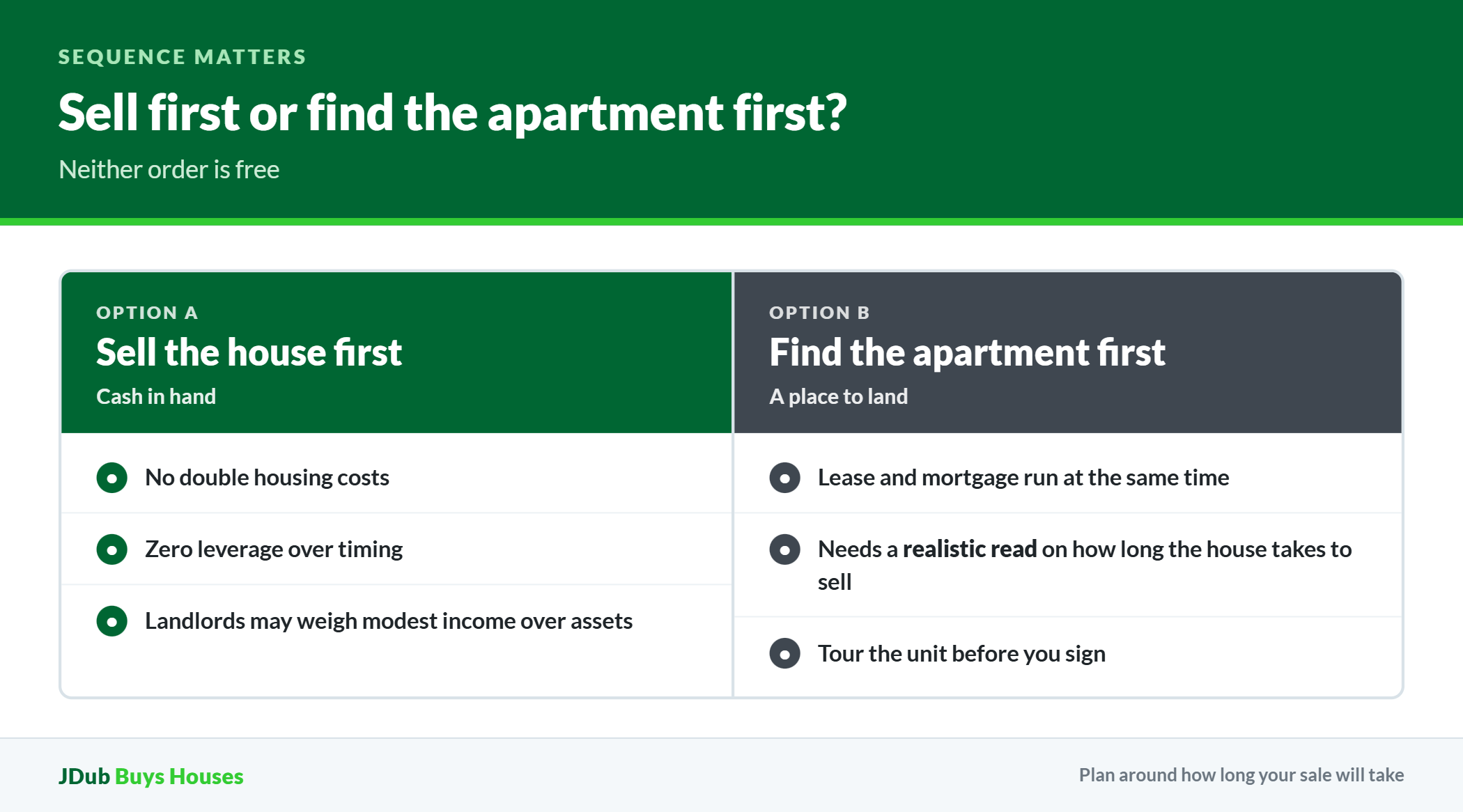
Selling first can backfire if you haven’t planned for how apartment landlords screen applicants. They run credit and income checks. A retiree with a paid-off house and a modest monthly income can get turned down for an apartment that costs a third of what the house costs to maintain. Proof of assets usually solves it, though you have to ask.
Sequence gets less thought than it deserves. Sell first and you’ve got cash in hand with zero leverage over timing; find an apartment first and you’re carrying a lease and a mortgage at once. Neither is free.
I lean toward lining up the apartment before closing, on one condition: you need an honest read on how long your house will take to sell. That number drives every other choice you’ll make. The national market has slowed. NAR reported on November 12, 2026 that October existing-home sales fell to a 3.75 million annual pace, the weakest reading since August 2010, with supply stretching to 5.1 months.
Five months of supply should change your plan. People who list in a soft market and assume they’ll be out in thirty days often end up paying double housing costs through a winter.
Picking your own closing date fixes most of that. Homeowners who sell directly to a local buyer like JDub Buys Houses can usually choose the closing date and stay a couple of weeks past it while the apartment gets ready. Agents can negotiate a rent-back too, though a traditional buyer with a loan has less room to bend.
Tour apartments in person before you commit to anything, since photos and floor plans leave out a lot. Walk the unit, open the closets, and measure for your bedroom set before you sign a lease on an apartment you’ve only seen in photos.
How Do You Downsize From a House to an Apartment?
A $150 storage unit looks cheap until it’s been running for three years straight. Most plans start with a spreadsheet of what fits in the new apartment, and then somebody opens the garage and the spreadsheet dies. Twenty years of stored belongings won’t shrink to an 1,100 square foot floor plan through careful planning alone.
Start measuring, not sorting. Get the apartment dimensions first and let them decide what survives. Working backward from the space beats working forward from your attachment to a sectional sofa.
Families packing for an apartment tend to burn weeks on the wrong items. Photos, documents, and jewelry are what actually matter, and they fit in a few boxes. The patio furniture and the second refrigerator soak up all the emotional energy while holding almost none of the value.
Sell the big pieces the apartment can’t hold early, while you can still be patient about price. Consignment shops, estate sale companies, and online marketplaces all work fine. Donations with a receipt can help at tax time, and the IRS publishes guidance on documenting noncash charitable gifts.
This is where selling as-is changes the project. A traditional sale means staging, showings, and a spotless garage, while a direct sale lets you take what you want to the apartment and leave the rest. I’ve bought houses where the sellers walked out with four suitcases and a filing cabinet.
Can’t decide on some of it? Rent a small storage unit for ninety days rather than twelve months. A short deadline forces the call. A long one just moves the problem and tacks a monthly bill onto your new apartment budget.
Moving into an apartment also means thinking vertically. Elevators, stair counts, and loading dock reservations all change your moving quote, and many apartment buildings want a certificate of insurance from your movers.
What Should You Know Before You Downsize to an Apartment?
A widow in her seventies once called me about the two-story colonial she’d lived in for thirty-one years. She hadn’t climbed to the second floor since her husband passed, so she was heating and insuring 1,400 square feet she never touched.
Plenty of sellers are in her shoes. Square footage you don’t occupy still costs money every single month.
Read the apartment lease first, and treat it like the contract it is. Pet policies, guest parking limits, lease-break penalties, and any cap on rent increases at renewal all live in that document, and skimming it can cost you later. Renters’ rights differ by state, so check the rules your state attorney general’s office or housing agency publishes.
Be honest about storage. Most apartment units hold far less than a house, and an off-site unit can quietly add a few hundred dollars a month to your real cost of living.
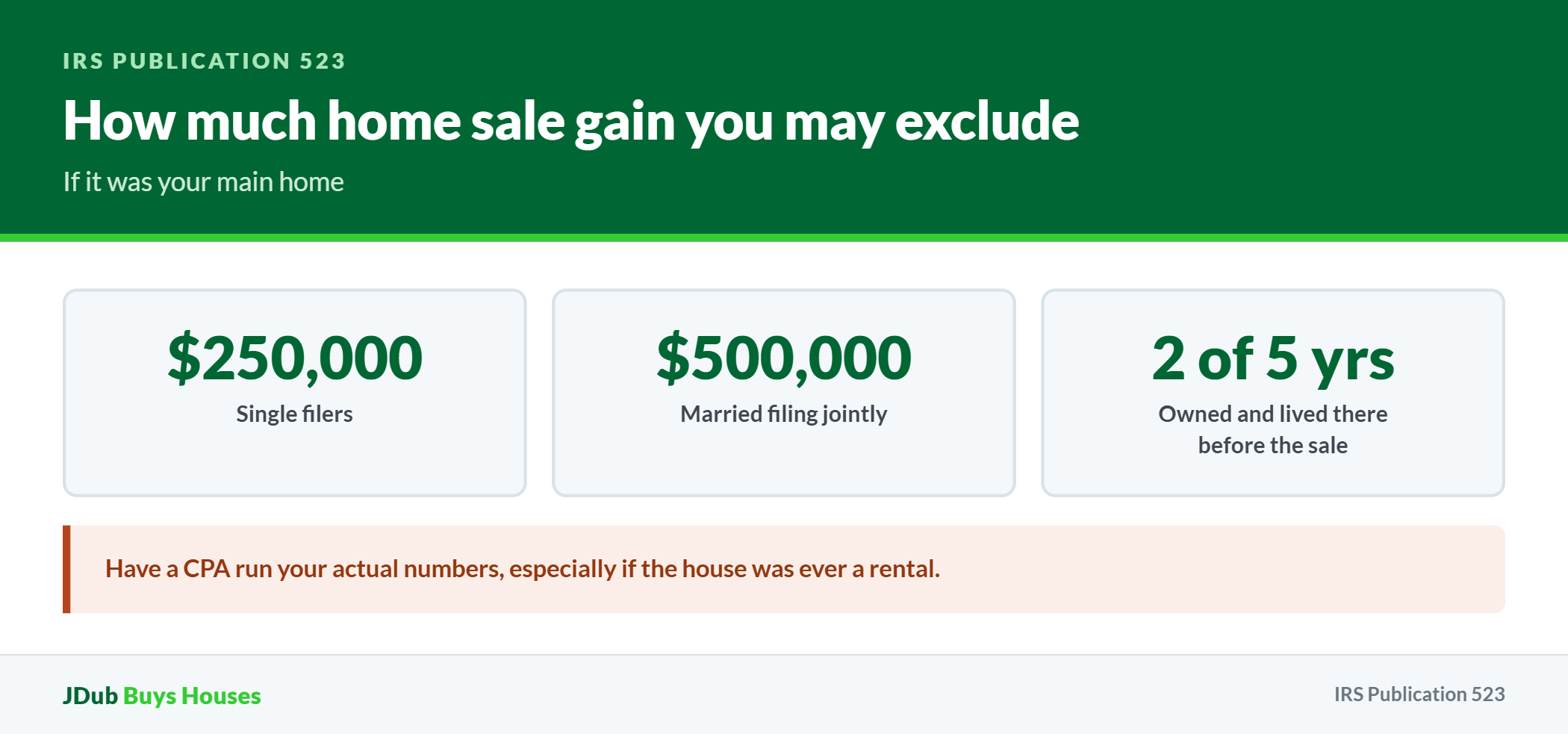
The IRS gets a say as well. Under IRS Publication 523, single filers can exclude up to $250,000 of gain on a main home sale, and married couples filing jointly up to $500,000. You must have owned and lived in the home as your main residence for at least two of the five years before the sale. Have a CPA run your actual numbers, especially if the house was ever a rental property.
Insurance gets simpler in an apartment. Homeowners insurance covers the structure, while renters insurance covers only your belongings and liability, and it usually costs a fraction of what you paid before. That’s real money back in your pocket every month.
Will you miss the yard? Some people miss it deeply. Others figure out by the second spring that they never liked mowing anyway.
How Much Does Moving From a House to an Apartment Really Cost?
I’ll say the uncomfortable part out loud: you will not keep the full sale price, and anyone claiming otherwise is selling you something.
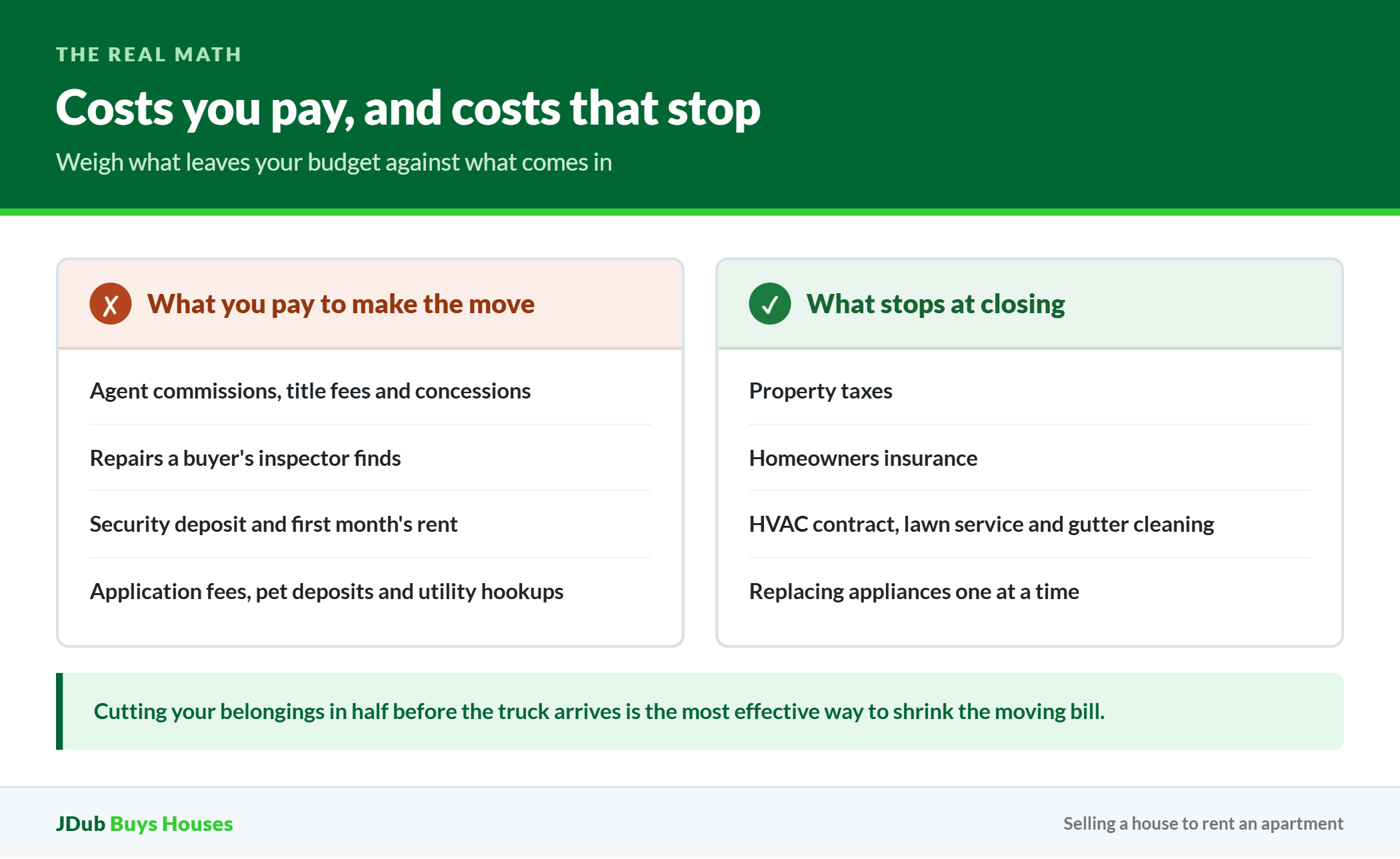
Agent commissions, title fees, and whatever concessions you give a buyer come off the top. Then come the repairs an inspector turns up, which buyers in a slower market will absolutely ask you to fix. All of that adds up before you’ve paid a single mover.
The apartment side has its own costs. Security deposit, first month’s rent, application fees, pet deposits, and utility hookups tend to hit in the same week. A deposit equal to one month is common, though some landlords ask more from applicants with thin recent credit.
Moving costs swing widely with distance and how much you’re hauling. Cutting your belongings in half before the truck shows up is the single best way to shrink that bill.
Weigh all of it against what you stop paying. Property taxes end at closing. So do homeowners insurance, the HVAC service contract, the lawn service, the gutter cleaning, and the slow bleed of appliances dying one at a time.
Careful pricing matters just as much on the sale side. The national median existing-home price was $416,700 in October 2026, up just 0.4% from a year earlier, the 40th straight month of annual increases. With appreciation that thin, overpricing hurts more than it used to, since no rising tide bails you out after sixty days of silence.
Sellers who need certainty sometimes give up a little price for a firm closing date and no repair demands. That trade deserves a real look, and a no-obligation offer from a direct buyer gives you an actual figure to set beside a listing estimate.
Is Renting an Apartment Better Than Owning After You Sell?
For more people than the housing industry likes to admit, renting an apartment beats owning.
Conventional wisdom says renting throws money away. That advice skips over what maintenance, property taxes, and insurance quietly eat each year without adding a dollar of equity. Money spent on a dead water heater isn’t an investment either.
Owning still builds equity, and an apartment builds none. At forty-two, with decades of earning ahead, owning usually wins over the long haul. At sixty-eight, with a paid-off house and a tired roof, the equity argument carries a lot less weight.
Liquidity is the piece people underrate. Home equity stays locked up until you sell or borrow against it. Sale proceeds sitting in an account can cover medical costs, help a child with a down payment, or just take the sting out of a surprise expense.
Rent does climb, and that’s a fair worry. Lately, though, the rental market has been unusually calm. Apartment List found rents up just 0.1% year over year in October 2026, the first positive annual reading in more than three years.
Flexibility is worth something too. A twelve-month lease lets you try out a neighborhood, a city, or life near the grandkids without a thirty-year commitment. I’ve watched sellers move into an apartment, dislike the area, and relocate across the country eleven months later with no financial damage at all.
Where I’d push back is on the idea that renting is permanent. Plenty of people rent an apartment for two or three years, bank the proceeds, and then buy something smaller and newer when the market suits them.
What Can You Expect From Apartment Living After a House?
One couple sold a four-bedroom with a pool and moved into a third-floor apartment with a balcony. Six months in, they told me the best part was that nobody called at seven in the morning about a broken sprinkler head.
That’s the real adjustment. Maintenance stops being your problem, and a surprising number of people find that strange at first.
Noise is the honest downside of apartment life. Shared walls and ceilings mean you hear the building around you, and after thirty years on a half-acre, apartment living takes a few weeks to get used to. Top-floor and corner units cost more for exactly that reason.
A smaller apartment forces discipline. You’ll buy less, store less, and clean less, and most people call that relief rather than loss.
Community tends to surprise people in a good way. Apartment complexes usually come with fitness rooms, pools, and shared outdoor spaces that somebody else maintains, so amenities you’d have paid to install at the house come included.
Your time changes shape too. One analysis of homeowner habits found the average owner spends 8.6 hours a week on maintenance, about 447 hours a year. You get those hours back when you move into an apartment, and they’re worth more than most people figure.
A man called me on a weekday afternoon. He was three months behind on his mortgage, with an auction date already on the calendar and his late father’s woodworking tools still in the garage. We closed before the sale date, he kept the tools, and he signed a lease on an apartment ten minutes from his daughter. Time was the one thing he couldn’t buy, so we worked backward from the auction date.
Facing a deadline like his? Talk to your lender and a HUD-approved housing counselor before anyone else. After that, look at your sale options, including JDub Buys Houses, with a clear head.
Common Questions About Moving From a House to an Apartment
“I’d be giving up my biggest asset.” You’re not giving it up, you’re converting it. The house doesn’t vanish; it turns into cash you control instead of a structure that controls your calendar. For sellers carrying deferred maintenance, that conversion usually preserves more wealth than holding on, at least in the sales I’ve seen come together.
Frequently Asked Questions
Can You Live Comfortably in an Apartment on $2,000 a Month?
Across most of the country, yes. That budget clears the national median rent figure cited earlier with room left for renters insurance, utilities, and parking in a lot of markets. High-cost coastal metros are another story, where $2,000 might only cover rent on a modest one-bedroom apartment. Check listings in the exact area you’re targeting before you build a budget around a national average.
Should I Buy a Condo Instead of Renting an Apartment?
Owning a condo keeps you in the ownership column, which appeals to people who hate the idea of paying rent. You’d still owe property taxes, insurance, and HOA dues, and special assessments for roofs or elevators can hit hard. An apartment trades equity for predictability, so choose based on how much financial surprise you can absorb.
How Long Does It Take to Sell a House and Move Into an Apartment?
In the current market, a traditional listing can take a couple of months from listing to closing, sometimes longer when inventory is heavy. Selling directly to a cash buyer usually shrinks that to two or three weeks, which is why sellers facing a lease start date or an auction deadline lean that way. Either way, build in more cushion than you think you’ll need for the apartment search itself.
Will I Owe Taxes on the Money From Selling My House?
Many sellers owe nothing, thanks to the federal exclusion and the two-year residence rule covered above. Gain above the exclusion limit is taxable, and your state may layer its own rules on top of the federal ones. Run your real numbers past a CPA before you spend the proceeds, especially if the property was ever rented out.
Is It Harder to Qualify for an Apartment After Selling a House?
It can be, and it catches retirees off guard. Landlords weigh monthly income more heavily than net worth, so a seller with plenty of cash and modest income sometimes needs bank statements, a cosigner, or a few months of prepaid rent. Ask the leasing office which documents they accept before you fill out an application.
What Happens to My Homeowners Insurance When I Move?
Your policy ends when ownership transfers, and your insurer refunds any unearned premium. Have a renters policy in place the day your lease starts, because the building’s coverage protects the structure, not your belongings. Many carriers will bundle it with auto coverage at a lower rate.
If you’re weighing a move to an apartment and want to know what your house would realistically bring, we’re glad to talk it through. There’s no pressure and no obligation, and we won’t push if staying put turns out to be the smarter call for you.
Trading an Amarillo House for an Apartment
We buy houses in Amarillo, and a lot of the sellers we meet are downsizing. Amarillo listings had a median asking price of $285,000 in October 2026, and the typical one had already sat for 38 days. We also buy homes in Borger, so a house up the road gets the same as-is offer.
Heading somewhere farther away? We buy houses in Lubbock and other Texas cities too. Leave behind whatever won’t fit in the apartment, and pick a closing date that lines up with your lease.
Let Us Help You Plan the Move
If you’re weighing a lease against another year of repairs, contact our team and tell us about your house. You can also fill out the short form below, and we’ll send a no-obligation offer you can compare against a listing.
Helpful Texas Blog Articles
- Can you sell a House in Texas with a Tax Lien on it?
- Can I Sell My House for Less than Appraised Value in Texas?
- What Taxes Do You Pay When Selling a House in Texas?
- How to Sell a House with a Squatter in Texas
- Can You Sell Your House With A Quitclaim Deed In Texas
- Are Open Houses Still Effective For Selling Your Texas Home
- FSBO Costs And Fees For Texas Home Sellers
- How to Avoid Closing Costs in Texas
- How to Sell a Fire-Damaged House in Texas
- How to Sell a Fixer-Upper House in Texas
- How to Sell a House When You are Behind on Payments in Texas
- How Long Does It Take to Force the Sale of Property in Texas
- Selling Home With Reverse Mortgage Loan
- How Long Does a Real Estate Contract Last in Texas