

A thin line of dried mud on a foundation wall deserves more attention than it gets. Subterranean termites chew through roughly $500 million worth of Texas property a year, according to Texas A&M AgriLife Extension. Texas runs from wet pine country in the east to hard caliche out west, and folks on the dry side assume the weather handles the problem for them. It doesn’t. I’ve walked houses on the Gulf Coast and on high plains slabs with live galleries hiding behind fresh paint. If you own a termite-damaged house and you want it sold, you have more than one road out.
What Are the Warning Signs of Termites in Texas Homes?
People ask me how a colony turns up three years after an inspector cleared the place. A native colony takes three to five years to grow up, and once it does, it can hold something like a quarter million workers. A clean report is a snapshot of one day, not a warranty on the next decade.
Here is what tends to show up first:
- Mud tubes. Narrow dirt tunnels running up a foundation, along a garage sill, or behind a water heater.
- Hollow wood. Tap it with a screwdriver handle. A papery sound means the inside is gone, even when the paint looks fine.
- Blistered paint in small patches, with no plumbing leak nearby, is another sign.
- Doors and windows that stick. Mud packed inside a frame swells the wood.
- Dropped wings on a windowsill or in a bathtub, usually in spring.
- Swarmers run about three-eighths of an inch, and all four wings are the same size. You can tell them apart from flying ants by their straight antennae.
The conditions that invite them are almost always man-made. Flowerbeds mounded above the slab line. A sprinkler head that soaks the brick every morning. Wood fencing set straight into dirt. A swamp cooler out west that has dripped down a wall for fifteen summers. Water plus wood plus dirt contact is the whole recipe. Older pier-and-beam houses give termites a crawlspace to work in unseen, and you see those in East Texas and in the older parts of most Texas cities. Newer slab homes let them climb through expansion joints. On the upper Gulf Coast you also have Formosan termites, which build bigger colonies and chew faster than the native kind. Sellers on that side of the state ask about them often, which is part of why we buy houses in Houston and the towns around it.
When Does Termite Swarm Season Hit Texas?
Timing matters more than sellers think. Down in South Texas, swarms start in January and February, but up in the Panhandle, AgriLife puts the flights in April or May. The soil has to warm up and stay warm first, and everywhere in between falls somewhere on that sliding scale.
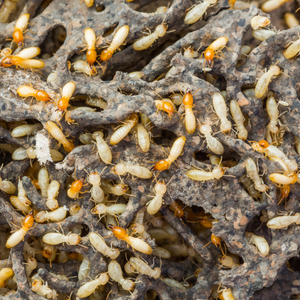
Phones ring in a narrow window once the weather turns. A homeowner sees a cloud of winged bugs by the back door, panics, and calls a pest company the same hour. Swarmers indoors mean an active colony in or under the house. Swarmers out by the alley may only mean one is working a fence post or an old stump.
That swarm window lands right on top of the busiest listing season.
Find termites in early spring, and you face a real fork: treat now and list three weeks later, or list as-is and let the price do the talking. There is no single right move. What gets people in trouble is treating in April, listing in May, and then never updating the paperwork to show the work was done.
Speed matters more than it used to, and this spring was slower than the last one. Sold homes spent an average of 82 days on the market in March 2026, up from 71 days a year earlier, per the Texas Real Estate Research Center. Almost three months of marketing is a long time when swarmers are flying, and the buyer’s inspector will show up in peak season too. My read: find them before your local swarm window and treat first. Find them after it, and you can consider your options.
Do You Have to Disclose Termites When Selling Your Texas House?
Sell it as-is, and the disclosure question takes care of itself, or so the logic goes at many kitchen tables. As-is terms settle who pays for repairs, but they do not affect your written disclosure duty as a Texas seller.
Section 5.008 of the Texas Property Code covers it. Sellers of single-unit homes have to provide the buyer a written notice about the property’s condition, filled out to the best of your knowledge. The TREC Seller’s Disclosure Notice is the form nearly every Texas sale uses, and I’ve watched a closing stall because a seller left one box blank. The form asks about termites, and it asks about past treatment and repairs, so a fixed problem still gets written down. Sign a contract without handing over that notice, and the buyer can walk away for any reason, with seven days from the day the notice reaches them.
Writing “unknown” when you truly don’t know is allowed. Guessing low to keep a buyer at the table is a different animal.
A few years back I bought a house from a couple splitting up assets in a divorce. Neither one wanted to manage contractors, showings, or each other, so they wanted it handled and the money split. We found mud tubes behind the water heater on a Saturday walkthrough, with a deep freeze and a set of golf clubs still sitting in the garage. They put the damage in writing without hesitation, and the closing was boring. Boring was exactly what both of them needed.
Being upfront also protects you after the money moves. A buyer who hears about hidden damage from their inspector is annoyed. A buyer who learns you knew and stayed quiet has a legal grievance and an attorney’s phone number. Write it down. Please attach the pest company’s paperwork if you have it.
How to Sell a House with Termite Damage in Texas
For years I asked every seller to treat first and sort out the rest later, and that advice was too simple. Treatment kills the colony. It does not rebuild a chewed sill plate, and it does not convince a lender the house is sound. Those are three separate problems, and which ones you solve depends on which buyer you are selling to.
| Path | What it costs you | Timeline | Best fit |
|---|---|---|---|
| Fix it, then list | Treatment plus repairs, paid up front | Longest | You have the cash and the patience. |
| List as-is with proof. | A pest report and a lower asking price | Medium | Damage is light and well documented. |
| Sell to a cash buyer. | Money off the price, no repair bills | Two to three weeks | Repairs cost more than you can float. |
The first route is the cleanest on paper. You pay a licensed applicator, replace the wood the colony ate, and hand a buyer a house with nothing left hanging over it. It also costs the most up front and takes the longest to reach a closing table.
The second route puts the evidence in the buyer’s hands. Order a Wood Destroying Insect report yourself, price the house to match what it says, and hand a copy to every serious buyer. FHA and regular loans can still work here, though lenders sometimes want treatment done before they fund, and repair holdbacks are worked out at the title company.
A cash sale is the third, where the buyer prices the damage into the offer and closes with no lender conditions. That is the lane we work in at JDub Buys Houses. It fits when the repair bill is more than you can float or when a contract has fallen apart twice and worn you out. Those same three routes come up with any damaged house, and you can watch them play out in how to sell a fire-damaged house in Texas.
Have you priced what the repairs would cost you in contractor time, not just dollars?
The mistake I see most often starts with path one. A seller runs out of money halfway through demolition, then tries to sell with the floor open and the framing exposed. An opened-up house scares buyers far worse than an intact one with a known problem. Finish what you start, or don’t start it.
What Does Termite Treatment Cost vs. Offering Buyer Concessions?
Fixing it usually beats knocking money off the price, and the gap is wider than most people expect. Treatment is the bargain of the two. Soil treatment and bait systems run from about $225 up to $2,500, per HomeGuide’s 2026 cost data, depending on the length of your foundation and the method used.
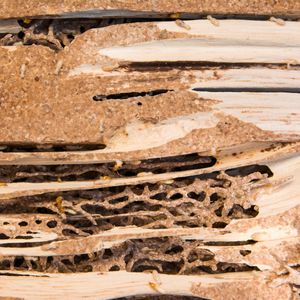
Killing the colony is one thing, and paying for the damage is where the numbers climb. Angi’s 2026 figures put the average repair bill near $3,000, inside a range of $1,000 to $10,000. HomeGuide puts major structural work on beams, subfloors, or load-bearing walls at $5,000 to $15,000 and up. Those are national averages, and labor in most Texas markets sits below the coasts. The spread still tells the real story: cosmetic damage is cheap; load-bearing damage is not. Buyers read structural trouble the same way as whatever caused it, and we go through that in selling a house with foundation problems in Amarillo, TX.
Concessions almost always cost more than the actual fix. A buyer’s agent asks their pest contractor for a worst-case estimate, then adds a cushion for the unknown. The credit request comes back built on the top of that range, so now you are arguing against a number nobody has to back up with an invoice. I would rather pay a licensed applicator and hand over a paid receipt.
One more piece of math sellers skip: your homeowners insurance almost certainly won’t help. Standard policies treat termite damage as a maintenance issue and leave it out, so there is no claim to file and no adjuster coming out. That money comes from your pocket or is deducted from your sale price.
What I would do depends on how bad it is. Active colony, light damage? Treat it and move on. Framing chewed up across several walls? A cash offer may beat retail once you subtract repairs and holding costs. That math is why we buy houses in Texas in any condition.
Which Termite Warranties Do Texas Buyers Want to See?
A termite bond does not automatically ride along to the new owner. Most pest companies charge a transfer fee, and many want a reinspection before they put the next owner’s name on the contract. The buyer’s agent will ask about that in writing, so call your company and get the answer before you sign anything.
Renewable bonds usually run $200 to $400 a year, covering annual inspections and re-treatment if the bugs come back. Some include repair coverage, and plenty don’t. Read which one you are holding.
Texas buyers and lenders keep asking for one document, the Texas Official Wood Destroying Insect Report, form SPCS/T-5. It runs four pages, with a diagram the inspector has to draw. Only a certified applicator or a licensed termite technician can fill it out. That license runs through the Texas Department of Agriculture, not TREC, so a general home inspector’s certification does not cover it. Texas does not require a termite inspection on every sale. A VA purchase loan does require one here, in all 254 counties, and an FHA appraiser who spots evidence will trigger one too.
Read the T-5’s own fine print sometime. The inspecting company can’t promise that another company’s old work killed anything. Inspectors are not engineers either, so they don’t judge how serious the damage is. That second line explains why significant damage sometimes needs an engineer’s letter on top of the pest report.
Buyer confidence comes from a stack of paper. The T-5. The treatment invoice. The bond, with its transfer terms spelled out. Photos of the repair work in progress. Buyers are not afraid of termite history; they are afraid of termite history they can’t check.
What Is Your Texas Home Worth with Termite History?
A seller called me about a 1960s ranch where her dad had lived alone for two decades. The report came back with old damage in two outside walls, treated years earlier by a company that had since gone out of business. No paperwork was left anywhere in the house.

The more damage that stays undocumented, the harder the pricing problem gets. The average Texas home value sat at $299,367 as of August 31, 2026, down 1.6 percent from the year before, per Zillow’s home value index. Treated damage with receipts barely dents a number like that, because buyers can see the work. History nobody can check is what drags a price down, since appraisers and buyers fill the gaps with their worst guesses. In a soft market, buyers have room to walk away, and they use it.
Condition elsewhere matters too. A termite line on a well-kept home with a mowed lawn and a newer roof reads as one item among many strengths. The same line on a tired rental, on a street full of repairs nobody made, reads as a reason to lowball. Same bugs, very different talk.
Anyone pricing a termite house should count carrying costs. Two more mortgage payments, two more insurance bills, and utilities and yard upkeep on an empty house. That can quietly eat the gap between a cash offer and a retail sale. Texas insurance rates have climbed hard, so every extra month of ownership costs more than it used to. One homeowner learned that math the hard way. He took a job a few hours away and moved his family, and his old house sat empty for almost a year while he carried two mortgages. It had a sunroom addition nobody wanted to inspect. Termite damage along the back bedroom baseboards had already killed one contract that spring. By the time he called us, he did not want top dollar. He wanted the second payment to stop. That math shows up all over the Panhandle, which is part of why we buy houses in Borger Texas and the small towns around Amarillo.
Frequently Asked Questions
Is It Hard to Sell a Texas House with Termite Damage?
Harder than a clean house, easier than most sellers fear. Cash buyers and local investors buy termite-damaged homes all the time because they price the repair into the offer and answer to no lender. Listing on the open market works too, as long as you disclose honestly and have a licensed pest company’s paperwork ready for the buyer’s inspector.
Is It Safe to Buy a House That Has Been Treated for Termites?
Usually yes, and a treated home sometimes carries more protection than an untreated one, thanks to an active bond and yearly inspections. Confirm four things: who treated it, what method they used, whether the warranty transfers, and whether the chewed wood was replaced or only the colony was killed. Ask for the state report and the treatment invoice.
Do Termites Lower a Home’s Value?
Active bugs and unrepaired structural damage do lower it, sometimes by more than the repair itself would cost, because buyers price the unknown rather than the lumber. A treatment on paper, with the damage fixed, usually has little effect on what a house brings. The gap between those two outcomes is paperwork, not luck.
Do I Have to Disclose Termite Damage When Selling in Texas?
Yes. The Texas Seller’s Disclosure Notice asks straight out about termites, wood-destroying bugs, and past treatment or repairs, and you answer based on what you know. Hiding a known infestation invites a fraud claim long after closing, which is far worse than a line on a form. Disclose it and attach the report.
Will a Lender Refuse to Finance a Termite-damaged House?
FHA and VA loans are the strictest. Texas sits in a high-probability zone, so a VA purchase loan needs a wood-destroying insect report on every file. An appraiser who notes active bugs or chewed structural wood will usually require treatment and repair before closing. Regular lenders care mostly about structure and safety. Cash buyers care about neither, which is why termite houses so often end up sold that way.
How Fast Can I Sell a Termite House in Texas?
A cash sale on a damaged house usually closes in two to three weeks in most Texas counties, limited mainly by title work. Owners who need to sell their house fast in Texas can move on that timeline, wherever the house sits. A listing with treatment, repairs, and a financed buyer runs closer to three months.
Termites are a repair problem that turns into a paperwork problem, and in Texas they are common enough that no reasonable buyer treats them as a scandal. What kills a sale is silence, not bugs.
Maybe you own a house with termite damage and you’d rather skip a spring of treatment, contractors, and a nervous inspector. It costs nothing to find out what a cash offer looks like. Reach out to JDub Buys Houses, tell us what you’re dealing with, and we’ll give you a number and an honest read. Sell if it makes sense; walk away if it doesn’t.
Helpful Texas Blog Articles
- How to Sell a House in Probate in Texas
- Paperwork for Selling a House by Owner in Texas
- How Long After an Appraisal Can You Close in Texas?
- Sell a House As Is Without Inspection in Texas
- Who Pays Closing Costs When Selling a House in Texas?
- How to Sell a Hoarder House in Texas
- Selling a House with Mold in Texas
- Can you sell a House in Texas with a Tax Lien on it?
- Selling a House with Unpermitted Work in Texas
- Can I Sell My House for Less than Appraised Value in Texas?
- Selling A House With Asbestos In Texas
- Can I Sell My Parents’ House With Power of Attorney in Texas?
- Can I Sell My House If My Spouse Is In Jail In Texas
- How to Sell a House With Termites in Texas Fast