
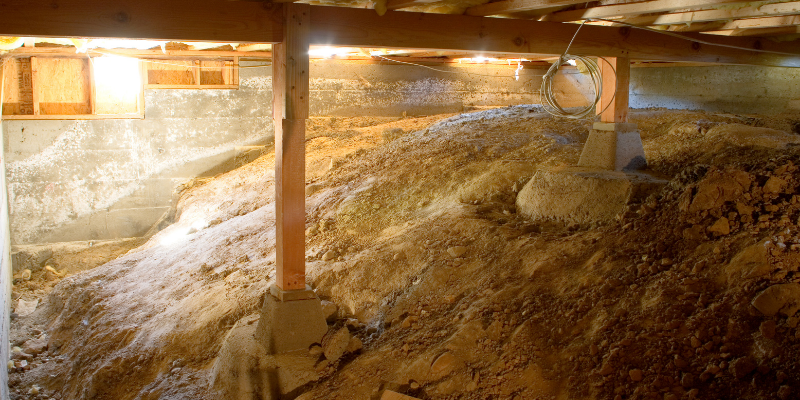
A pump, a shop vac, one Saturday afternoon. Plenty of Texas homeowners sketch out this repair plan. They slide under a pier-and-beam house and find two inches of standing water on the crawl space floor. Then the inspection report lands. Once phrases like “active moisture intrusion” and “suspected fungal growth” show up in writing, the buyer’s agent stops asking about paint colors and starts asking for credits.
Texas isn’t a market where a seller can wave off a defect right now. Redfin’s August 2026 data puts the median Texas sale price at $333,611, down 1.3 percent year over year, with a median 68 days on market. Buyers have choices. A house with water under the floor competes against dozens of dry ones in the same zip code, and they know it.
To a lender, water beneath the joists is a collateral issue. I’ve bought homes in Houston where the crawl space took water every spring and the framing was still hard as a hammer handle. I’ve walked others in East Texas, where trapped moisture turned the subfloor spongy enough to push a screwdriver through. Same symptom on paper, very different repair bill. The only way to know which house you own is to get under there and look.
Your Three Selling Paths, Before You Spend a Dollar
An heir living outside Denver called me last year about her late father’s house in Pflugerville. She was mid-divorce and wanted one thing: the sale handled cleanly, without flying to Texas twice to argue about who pays for what. His fishing boat was still in the garage when we walked it.
That call shaped how I explain the choices. You’ve got three real paths, and the right one depends less on the water than on what you’re protecting.
Repair first, then list. This gets the highest gross price when damage is limited and you’ve got cash and patience. You front the repair money and the carrying costs while the market takes its time.
List as-is on the MLS. Your agent prices the house for condition, and you wait for a buyer whose financing survives an appraiser’s flashlight. Conventional and cash buyers usually manage it. Government-backed loans often can’t, which shrinks your buyer pool when you need it wide.
Sell direct to a local cash buyer. You trade some top-line price for certainty, speed, and zero repair spend. Companies like JDub Buys Houses buy houses in this condition and price the water into the offer instead of hunting for it later. For that heir in Pflugerville, certainty beat squeezing the last few percent out of a slow market.
Can You Sell a House With Water in the Crawl Space in Texas?
Conceal it, and you can lose the house twice: once at the closing table and again when the buyer’s attorney sends a demand letter. A claim under the Deceptive Trade Practices Act can reach actual damages plus attorney’s fees and up to three times actual damages when a court finds the seller acted knowingly. An as-is clause won’t save you, since Texas courts have held it doesn’t shield a seller who concealed a defect.
So yes, you can sell. Wet crawl spaces trade hands in Texas every week of the year. What changes are who’s allowed to buy and how the money reaches you.
Financing is the real gate. HUD’s appraisal rules say the crawl space can’t be excessively damp and can’t have water pooling. Where moisture problems are evident, the appraiser has to require a vapor barrier or another way to stop water infiltration. The appraiser must visually observe all areas of the space, and where system components run underneath, the required vertical clearance is 18 inches. A sump pump is acceptable to HUD as long as it works the day the appraiser shows up. HUD’s guidance adds the part sellers miss: a pump is not a cure-all, and an underwriter can reject a property over significant incurable ponding.
Cash removes all of that. No appraiser under the house, no underwriter reading a moisture report, no repair escrow. Cash buyers move on these houses, while financed sales stall in the third week.
What Causes Water in a Crawl Space in Texas Homes?
Most of the time, the water didn’t rise up from below. It fell off your roof.

Downspouts dumping against the foundation are the number one culprit I find under Texas houses. Close behind is grading that slopes toward the structure instead of away. Add a gully washer of the kind the Hill Country gets in May, and a few thousand gallons head for your foundation vents. Extend those downspouts six feet, and a surprising number of “crawl space water problems” quietly disappear.
The clay underneath drives the rest. Much of Texas sits on expansive soil that swells when it rains and shrinks into cracks wide enough to swallow a garden hose by August. Saturated clay pushes water sideways through hydrostatic pressure until it finds the lowest opening in your outside wall. That movement is why Texas homes rarely have basements and why older neighborhoods like Munger Place in Dallas and Fairmount in Fort Worth are full of pier-and-beam houses.
Then there’s plumbing. A weeping supply line, a cracked cast iron drain, and a condensate line from the AC that was never routed outside. The tell is water that’s present in dry weather. When we buy houses in Houston, a bad line under the floor is one of the first things we check.
Humidity earns its own mention along the Gulf Coast. When the air runs in the eighties and the ground under the house stays cool, condensation forms on ductwork and joists. Not a drop of rain has to fall.
What Buyers in Texas Think When They Hear “Crawl Space Water”
In Dallas, homes sold for a median of about $449,000 over the three months ending August 2026 and took roughly 50 days to sell, per Redfin. A buyer writing an offer at that price has already toured six other houses that month. None of those had water in the crawl space.
Buyers don’t price the repair. They price the fear.
Tell a buyer there’s moisture under the floor, and their mind runs a chain: water, mold, rotted joists, insurance hikes, and denied claims. Then a resale talk five years out where they’re the ones explaining it. Their agent piles on, fairly so. They multiply your $6,000 problem into a $25,000 problem, because the unknown always costs more in someone’s head than on an invoice.
What flips the dynamic is paperwork. A written scope from a licensed contractor. Photos of the finished work. A paid invoice. Those do more for buyer confidence than any talk at the kitchen table. Without them, you’re bargaining against a fear you can’t see.
Do You Have to Disclose Crawl Space Water to Texas Buyers?
Write it all down, every bit of it, and you’ll sleep better than the seller who decided to guess.
Texas Property Code Section 5.008 requires most sellers of single-unit residential property to hand the buyer a written disclosure notice covering the home’s condition. The form asks about improper drainage and about water damage not due to a flood event, which is exactly what a wet crawl space is. The Texas Real Estate Commission publishes the standard form, and I’ve seen sales stall over one unchecked box on it. If a contract gets signed before you deliver that notice, the purchaser has seven days after receiving it to terminate for any reason.
After Hurricane Harvey, lawmakers expanded the flooding questions. Sellers now have to address each of these:
- Whether the property sits in a FEMA-designated 100-year or 500-year flood plain
- Whether it sits in a reservoir flood pool
- Whether it has flooded at least once in the past five years
- Whether it has ever been repaired for flood damage
- Whether the seller has ever received flood insurance proceeds for it
A handful of transfers are carved out, including foreclosure sales, transfers between co-owners, and transfers between spouses in a divorce. Check with a Texas real estate attorney before concluding you’re exempt.
“Unknown” is an honest answer when it’s true. Marking it because you’d rather not explain the sump pump in the corner is where sellers get themselves sued. Disclose the water, disclose what you did about it, and attach the invoices. Those rules cover every kind of wet house, and we walk through them again in Sell a House with Water Damage in Amarillo, TX.
How to Check Your Crawl Space for Water Issues Before Listing
Which brings up the part you can handle yourself, with a flashlight and jeans you don’t care about. Pop the hatch and give yourself twenty minutes down there before anyone else does.
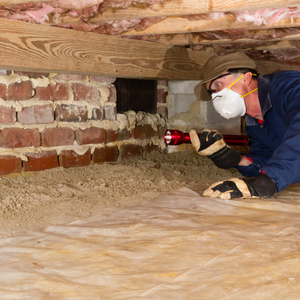
Standing water shows itself right away. Damp soil that never dries is the more common finding and matters just as much, feeding mold and warping the floors above. Run your hand along the bottom of the joists near the outside walls. Dark staining, fuzzy growth, or wood that gives under thumb pressure means this has been running a while.
Look at the vapor barrier if there is one. Plastic that’s torn, bunched, or floating on a puddle hides what’s underneath instead of stopping it. Check whether the soil under your drain lines is wetter than everywhere else.
Then go outside during the next real Texas downpour and watch where the water goes. A path that ends at your foundation wall tells you more than any moisture meter.
A cheap hygrometer left under the house overnight gives you a reading you can put in writing. Above 70 percent, damp air is part of your story. For the rest, hire an engineer who doesn’t sell repairs.
How Much Does Crawl Space Water Damage Cost to Fix in Texas?
Most sizable Texas cities require a permit for structural work under the house, meaning piers, beams, or joists, and the fee usually runs $30 to $300. A vapor barrier or drainage correction often doesn’t need one. Ask which category your job falls in, because that permit closeout is what a buyer’s agent will want to see. Skip it and you’re holding an undocumented repair, nearly as hard to sell as the original problem.
Encapsulation is the priciest item. Angi’s 2026 cost data puts most projects between $5,000 and $15,000 depending on square footage, condition, and materials, with the national average near the bottom of that range at $5,500. Labor runs 50 to 70 percent of the total. Texas rates sit below the coastal states, so bids here often come in lower.
Here is how the common line items break down:
| Job | Typical cost |
|---|---|
| Basic seal and vapor barrier | $2 to $4 per square foot |
| Extensive encapsulation | $3 to $10 per square foot |
| Sump pump, installed | About $1,100 |
| Mold remediation | $500 to $2,000 |
What those averages leave out is the damage the water already did. Sistering rotted joists, replacing the subfloor, and mold work are separate line items, and they swing a $7,000 project to a $20,000 one. Any bid that ignores them isn’t a real bid.
Corrections outside the house run cheapest and fix the most. Regrading a side yard, extending downspouts, and cutting a swale toward the street often costs less than a refrigerator. I’ve watched that alone dry out a crawl space in Round Rock that three contractors wanted to encapsulate.
How to Fix or Minimize Crawl Space Water Problems Before You Sell
Sellers usually ask whether to fix the water or just the drainage. Fix the source first, always. Sealing a wet crawl space with a heavy vapor barrier before you’ve corrected the grading and gutters is money set on fire. You’ve trapped the moisture with nicer plastic. Water outside, then moisture inside. That order never changes.
Once the outside is handled, a vapor barrier across the crawl space floor and up the piers does real work in a humid climate. A dehumidifier rated for the space holds humidity where wood stays stable. A perimeter drain tied to a sump pump makes sense only where water keeps arriving.
Whether to do any of it before selling is the harder question. If the damage is limited to moisture and your buyer is an investor, repairs rarely return what you put in. Fixing pays off in the middle case: a house that’s otherwise clean and would attract financed buyers if the crawl space weren’t in the way. Spending $8,000 to put it back in front of those buyers is math worth running. Spending it on a house that also needs a roof and a kitchen is not. Keep every receipt and photo. That folder is worth real dollars at the table. If the roof and the kitchen need work too, you are in a different territory, and how to sell a fixer-upper house in Texas is the better read.
How to Price Your Texas Home Fairly When Water Problems Exist
For years I priced these houses off the repair estimate, and that was backwards.

Buyers don’t subtract the contractor’s bid from the comps. They subtract the bid, plus a cushion for what it missed, plus something for the months of their life spent managing it. A $9,000 problem shows up as a far larger gap in offers.
Start with honest comps for your neighborhood and condition, not the wishful ones from the market’s peak. The Texas Real Estate Research Center’s August 2026 Texas Housing Insight put the median seller price cut in June at $12,000, about 3.3 percent of the initial list price. Sellers who priced to condition up front mostly didn’t need it.
Price a house with a known defect too high, and you’ve made the most expensive mistake in this category. You burn the first three weeks of attention, collect no offers, and cut. Buyers read that drop as proof the problem is worse than disclosed. In Austin, the median sale price ran about $550,000 over the same three months, with homes averaging 57 days on market. That spiral costs real money in carrying costs alone.
My advice: get one solid repair bid and disclose it. Price the house with a visible discount against dry comps, and tell buyers what you did and didn’t fix. Transparent pricing brings offers. Hopeful pricing brings inspections that fall apart.
What Are Your Options for Selling a Water-Damaged Texas Home Fast?
A seller in Baytown had a rental she never wanted, left to her by an aunt. The crawl space took water every time the bayou backed up. Two tenants in three years, both of whom stopped paying, and a garage of half-empty paint cans. She was done being a landlord by the time she called.
Speed comes from removing contingencies, not from marketing. An ACash offer with no appraisal, no financing contingency, and no repair escrow can close in one to two weeks because nothing is left to go wrong. The title work is the long pole.
Listing as-is still works if you can wait. Renovation loans let a financed buyer roll repairs into the mortgage, though the paperwork adds weeks and plenty of buyers abandon them midstream. Auction suits properties with equity and no urgency, and few others.
A direct buyer offers a known number and a known date. We buy houses in Texas in the condition they sit in today, including a wet crawl space. That Baytown seller took a fair cash price, left the paint cans, and walked away from two years of grief. Sellers down on the bay run into this most often, which is why we work as cash home buyers in League City, TX, and the towns around it.
Frequently Asked Questions
What’s the Most Common Reason a House Fails to Sell?
Price that doesn’t match condition, nearly every time. A house with a disclosed crawl space issue priced like a dry one will sit and go stale. Correct pricing at the start beats three cuts, because buyers read cuts as evidence something’s hidden.
How Much Does It Cost to Fix Water in a Crawl Space?
It depends on whether you’re managing water or repairing damage. Corrections outside the house sit at the cheap end and solve a surprising share of cases. Full encapsulation runs about $3 to $10 per square foot. Rotted joists, subfloor replacement, and mold remediation are separate charges on top.
How Much Does Water Damage Reduce a Home’s Value?
Less than sellers fear when it’s documented and repaired, more than they hope when it’s active and unexplained. Buyers discount for uncertainty, so an unrepaired wet crawl space usually costs more than the repair would have. Permits, photos, and a warranty close most of that gap.
What Hurts a Home’s Value the Most?
Structural problems top the list: foundation movement, rotted framing, and roof failure. Behind those sit active moisture, unpermitted additions, and anything an appraiser flags as a health or safety concern. Cosmetic issues barely register, though they shape how buyers read everything else.
Do I Have to Disclose a Wet Crawl Space in Texas?
Yes. The seller’s disclosure notice asks directly about water damage, improper drainage, and known defects. A crawl space that takes water after every heavy rain is what those questions are aimed at. Leaving it blank when you’ve run a pump for two years is the kind of omission that follows you home after closing.
Will a Lender Approve a Loan on a House with Crawl Space Water?
Sometimes, and it depends on the loan and the appraiser. Conventional financing has more tolerance than FHA or VA, which treat standing water and visible rot as conditions to clear before funding. Even so, an appraiser who notes active moisture can render the appraisal subject to inspection and repair, putting the work back on you before the buyer closes.
If you’ve read this far, you probably already know which direction you’re leaning. Fix it and list it if you have the time, the cash, and the patience for contractors. Sell it as it sits if you’d rather be done. Either way, it helps to know what the house is actually worth in its current condition before you spend a dollar on it. Reach out to JDub Buys Houses, and we’ll give you a number. You can do whatever you want with it, including nothing at all.
Helpful Texas Blog Articles
- How to Sell a House in Probate in Texas
- Paperwork for Selling a House by Owner in Texas
- How Long After an Appraisal Can You Close in Texas?
- Sell a House As Is Without Inspection in Texas
- Who Pays Closing Costs When Selling a House in Texas?
- How to Sell a Hoarder House in Texas
- Selling a House with Mold in Texas
- Can you sell a House in Texas with a Tax Lien on it?
- Selling a House with Unpermitted Work in Texas
- Can I Sell My House for Less than Appraised Value in Texas?
- Selling A House With Asbestos In Texas
- Can I Sell My Parents’ House With Power of Attorney in Texas?
- Can I Sell My House If My Spouse Is In Jail In Texas
- How to Sell a House With Termites in Texas Fast
- Selling a House With Water in the Crawl Space in Texas